How To Master Past Indefinite Tense: Simple Definition, Rules, Examples, & Unexpected Concept (2026)
The Past Indefinite Tense, also called the Simple Past Tense, is one of the most powerful and widely used English tenses. We can also use Past Indefinite Tense in place of Present Perfect Tense or Past Continuous Tense.
We use it to talk about completed actions, old truths, changed routines, past habits, and events that happened at a definite, indefinite, or unspecified time in the past.
If you ever struggle with “Did,” V2 forms, question making, confusing examples, or mixed time references, this guide will give you complete clarity. Every rule is explained with simple definitions, real-life examples, and quick formulas you can remember instantly.
Table of Content
What Is Past Indefinite Tense? (Simple Definition of Past Simple)
The Past Indefinite / Simple Past Tense tells us about an action, event, truth, habit, or routine that is completed or changed in the past.
It is an Action Tense that focuses on what happened earlier — no connection to now.
KJ – What is the definition of Past Simple Tense?
Mr English – Past Simple! The work has finished.
KJ – Ummmm! The definition is based on its name Past Simple. Past means ‘Old, changed, or completed.’ Simple means “easy.” What is more easy than telling a truth!
This is an Action Tense. It means, ‘Old or Changed Truth, Completed Action; and Old or Changed Routine.’
KJ – CONFUSED? TAKE A LOOK BELOW TO UNDERSTAND IT CLEARLY!
Simple Definition (Perfect for Beginners):
We use the Past Simple when something happened in the past and is now finished.
Common Names:
– Past Simple Tense (British English)
– Simple Past Tense (American English)
– Past Indefinite Tense (Universal English)
– Preterite / Preterit Tense (American English)
When we share any information or detail that is old, not true, or changed in the past; we use Past Simple Tense.
- Old/Changed truth, habit, or routine.
- Completed action or event at a definite time, indefinite time, or with unspecified time.
- We also call it “Preterite Tense or Preterit Tense (in American)”.
Rules of Past Simple Tense
- Verb 2nd form (Only For Affirmative) = I, He, She, It, We, You, They, This, That, These, Those, There, Here, Singular Noun, or Plural Nouns, etc.
- Did + Verb 1st form = I, He, She, It, We, You, They, This, That, These, Those, There, Here, Singular Noun, or Plural Nouns, etc.
Format: Formula & Structure of Past Indefinite Tense
- Affirmative (Positive Sentence) = Subject + verb 2nd form + other words.
- I visited London.
- She cooked dinner.
- Negative = Subject + did + not + verb 1st form + other words.
- I did not visit London.
- She did not cook dinner.
- Simple Interro (Yes/No Question) = Did + subject + verb 1st form + other words?
- Did you visit London?
- Did she cook dinner?
- Simple Interro Negative = Did + subject + not + verb 1st form + other words?
- Did you not visit London?
- Did she not cook dinner?
- Interrogative (WH-Question) = Wh-family + Did + subject + verb 1st form + other words?
- Why did you leave early?
- When did they arrive?
- Interrogative Negative = Wh-family + did + subject + not + verb 1st form + other words?
- Why did you not leave early?
- When did they not arrive?
When Do We Use the Past Indefinite Tense?
To Express an Old or Changed General Truth
When we share any true information or detail that is old or changed, we use Past Simple. A changed truth means the truth is no longer true. An old truth means the truth is old but we do not know “Is it still true or not?”
- I worked hard when I was young. (but now, he does not). (Means – Changed General Truth)
- He challenged me and I accepted. Luckily, I won. (Means – Old General Truth but still true.)
Let’s Breakdown!
- He challenged me. (It is still true, “he challenged you in the past.”)
- I accepted. (It is still true, “I accepted in the past.”)
- Luckily, I won. (It is still true, “I won in the past.”)
So, We can also use Present Simple when our only focus is to show the information or detail is still true, we do not care about Past at all = He challenges me and I accept it. Luckily, I win. (Means = General Truth, still true)
Examples:
- I heard from somewhere that he challenged me. (Means – Old General Truth but not sure)
- I worked hard (but not anymore). (Means – Changed General Truth.)
- They failed a lot in college exams. (Means – Changed/Old General Truth.)
- We surprised her. (Means – Old General Truth)
- She praised the teachers. (Means – Old General Truth)
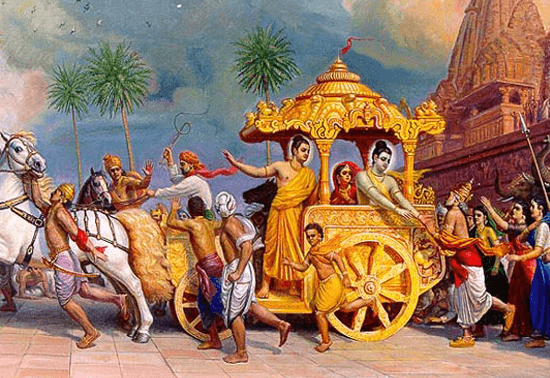
- Lord Rama’s stepmother exiled him from Ayodhya. (Means – Old General Truth that is still true.)
To Describe Old or Changed Daily Routines
Use Past Simple when a routine used to happen but does not happen anymore. The routine has changed or we do not follow it anymore.
Common frequency words:
usually, sometimes, never, daily, regularly, often; every year / month / day, every weekend / Summer / Winter, every morning / night; once in a week / month / year, always, fortnightly, hourly, annually, quarterly, constantly, frequently, generally, rarely, occasionally, normally, sometimes, seldom, ever, etc.
Examples:
- He woke up early in the morning. (Means – Old/Changed Daily Routine.)
- We never cared about this house. (Means – Old/Changed Daily Routine.)
- I frequently brought chocolates for the kids. (Means – Old/Changed Daily Routine.)
- They traveled too much. (Means – Old/Changed Daily Routine.)
- How did you change your lifestyle? (Means – Ask for Old/Changed Daily Routine.)

To Describe Old or Changed Habits
Habits are part of routine. When habits stop, has changed, or is old, we use Past Indefinite.
Examples:
- I consumed sweets a lot when I was a kid. (Means – Old/Changed Habit or Routine.)
- He cried a lot. (Means – Old/Changed Habit or Routine.)
- They stole money once in a while. (Means – Old/Changed Habit or Routine.)
Completed Action or Event at a Definite Time
When an action or event has been completed and the time is clear and specific, we use Past Simple.
Examples:
- He packed his bag at 8 pm. (Means – Completed action with a definite time.)
- I completed my test 1 hour ago. (Means – Completed action with a definite time.)
- Did you start to learn English 2 years ago? (Means – Ask for Completed action with a definite time.)
Completed Action or Event at an Indefinite Time
When an action or event has been completed but the time is not definite (not exact), we use Past Simple.
Examples:
- He packed his bag in the evening. (Means – Completed action with an indefinite time.)
- I completed my test recently. (Means – Completed action with an indefinite time.)
- Did you start to learn English already? (Means – Ask for Completed action with an indefinite time.)
Completed Action or Event in Unspecified Time
When an action or event has been completed and the time is not mentioned at all. The time is not available or we do not need to show time in a sentence, we use Past Simple.
Examples:
- He packed his bag. (Means – Completed action with an unspecified time.)
- I completed my test. (Means – Completed action with an unspecified time.)
- Did you start to learn English? (Means – Ask for Completed action with an unspecified time.)
Quick Summary of Past Indefinite Examples
| Definition Type | Example |
|---|
| Old truth | He spoke politely. |
| Changed habit | I smoked once. |
| Definite time | She left at 9 PM. |
| Indefinite time | They visited us recently. |
| Unspecified time | He wrote a letter. |
Frequently Asked Questions: Most Important
What is the easiest way to understand Past Indefinite Tense?
Think of it as any action that started and finished in the past — no effect on the present.
Do we always use the verb second form (V2) in Past Simple?
No, we only use it with Simple sentence where there is no negative or question. For example: He played at school.
But if there is negative or a question then: He did not play at school or Where did he play?
What is the difference between Past Simple and Present Perfect?
Past Simple = finished action with past time (action that ended in past.)
Present Perfect = action relevant to now / present time (action that has ended in present.)
Is “yesterday” a Past Simple keyword?
Yes. Words like yesterday, last night, ago, in 1999, earlier, etc. strongly signal Past Simple.
Why do students confuse Past Simple and Past Continuous?
Because Past Simple focuses a finished action, while Past Continuous focuses on an ongoing action / progress of action at a past time.
How do I learn Past Indefinite Tense?
You should follow these steps:
1. Read the whole article on Past Tense.
2. Go through all examples and use them in real life.
3. Try to take all the English tests available.
4. Try to practice by making sentences yourself and reply in comment section. We will correct your mistakes and improve your skills.
Practice the Past Indefinite Tense: Quick Tests for Strong Grammar Skills
Beginner Friendly Exercise With Four Options Each
Practice the tense with these interactive quizzes: It has a balanced touch of basic to advanced questions.
- One: Exercise 1
- Two: Exercise 2
- Three: Exercise 3
- Four: Exercise 4
- Five: Exercise 5
- Six: Exercise 6
- Seven: Exercise 7
- Eight: Exercise 8
- Nine: Exercise 9
- Ten: Exercise 10
Fill In The Blanks Quiz: Learn English With Paragraphs
Slightly more difficult then above quiz, there you will fill the blanks in the paragraphs.
- One: Paragraph Exercise 1
- Two: Paragraph Exercise 2 [The content will be here soon.]
Story Time: Learn and Improve English With Story Tests
The most useful exercises in English, you will learn English by filling interesting story gaps. You will improve not only you English but also vocabulary. [The content will be here soon.]
That is how we use Past Simple with a definite, indefinite, or unspecified time.
Advice – Never learn any language using another language. You should learn English in English, not in your native language (mother-tongue). Just like you learned your mother tongue in your own mother tongue. By learning in this way, only makes your English accurate, fluent, and you learn it like a Pro.
Practice in Comment Section: I assure our Team will correct your grammatical mistakes there.